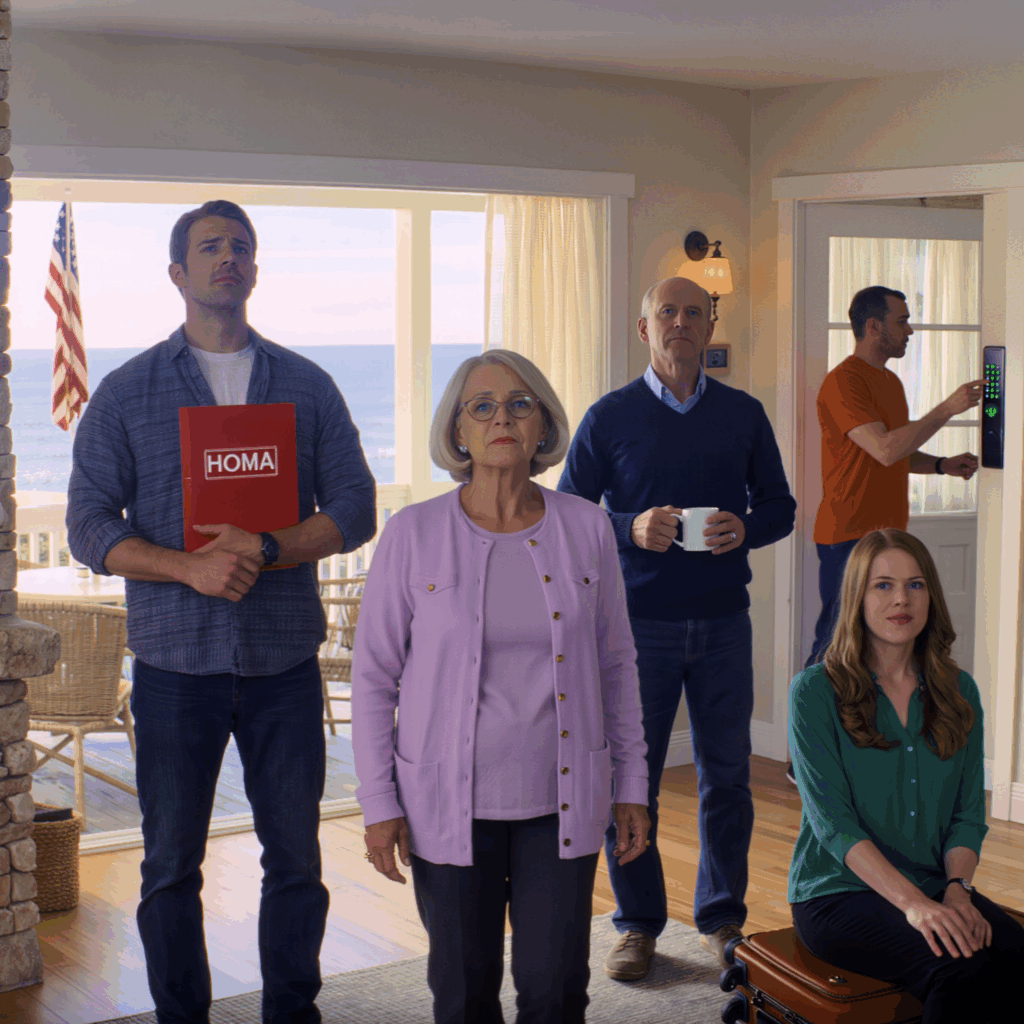
I bought my parents a beachfront home worth $425,000 for their 50th anniversary. When I arrived, my mother was crying, and my father looked shaken. My sister’s family had seized the place. Her husband confronted my dad aggressively, barking, “This is my house. You need to get out.” My sister snickered until I walked in — the room fell silent.
Let me introduce myself: I’m Thomas, 37, the eldest child, and the family’s designated problem-solver. As a neurosurgeon, I practically live between my locker and my suitcase. My life is organized down to the minute, starting at 4 a.m., with pages of notes as evidence. I hardly drink, I exercise when possible, and I save diligently — old habits from a childhood spent watching my parents stress over bills. I used to reassure my mother, “It’ll be fine,” while she worried over money. Growing up, I learned to face fear head-on and handle emergencies, becoming the dependable one.
Two weeks earlier, my parents hit fifty years of marriage, and I wanted to give them a true celebration — a place where the air smelled salty, the ground felt solid, and nothing reminded them of hand-me-downs or financial anxiety. I found a charming, slightly uneven blue cottage above the bay with a white deck and two palm trees swaying nearby — all for $425,000.
I bought the house in their names, set up utilities, stocked the fridge, and hid a small note in the silverware drawer for slow mornings: “With love, T.” I didn’t tell anyone else, not even my sister. On the anniversary, I drove over with cake and sparkling cider, soaking in the perfect blue sky and crystal ocean. But the moment I pulled up and saw an unfamiliar SUV in the driveway, something felt wrong.
The front door was half-open, creaking in the wind. Inside, my mother stood in the kitchen gripping a towel like she was surrendering. Her eyes were swollen, my father sat hunched over among boxes, hands shaking. Voices echoed from the hallway and a cartoon blared from the living room — I hadn’t turned it on.
“Mom—” I began, but my brother-in-law Kyle appeared, barefoot, beer in hand. He stepped in front of my father, pointing toward the door again. “This is my house. Get out.”
From the couch, my sister Julia snorted. “Relax, Dad. We’re just getting settled.”
The cake box felt suddenly heavy in my grip. Everything went unnervingly still.
To understand how the home I’d imagined as a refuge became a battleground, we need to go back a bit.
Julia, my younger sister by two years, cycled from “artist” to “free spirit” to someone going through a “rough patch.” My parents did what they could — cleaning up her chaos quietly. I filled the rest of the gaps. First textbooks, then a semester of tuition, then helping with her first apartment until her husband Kyle secured startup funding. Eventually, it was always me. I paid for her oldest kid’s braces when their insurance fell apart. I funded a used minivan when their bank declined them. I co-signed a lease after they were evicted. Each payment felt like an attempt to steady the family, to smooth its cracked edges. I misjudged.
My parents helped in subtle ways too. Mom stuffed Julia’s trunk with groceries disguised as “cleaning the pantry.” Dad loaned Kyle his tools — which usually returned in worse condition. The family chorus remained the same: “You know how your sister is.” “Not everyone is like you, Thomas.” “You’ve always been responsible.” During residency, half-asleep on call room mattresses, I’d transfer money at midnight because “the landlord is changing the locks in the morning.” At some point, I became nothing more than a card they swiped without glancing at the balance.
When I found the beach house, I handled everything with surgical precision. The deed went into a trust with my parents as lifetime beneficiaries. I set up a tax account covering 20 years and prepaid the HOA fees. I changed the locks. Holding the keys felt like holding hope itself. I told my parents a week before the anniversary, giving them time to let the news settle. When we toured the place, my father touched the banister tenderly, my mother opened cabinets with wonder. We sat on the deck, listening to the gulls.
“It’s yours,” I told them.
My dad couldn’t speak; Mom said, “It smells like lemons and fresh air.” It was perfect. I slept on an air mattress that night to ensure everything ran smoothly. The next day, I spent hours operating on a little boy with a plum-sized tumor. The house stayed their sanctuary.
But things deteriorated fast, as they tend to. Julia called Mom the day after, nosy as always. “Are you at the beach? Whose house is that?” Mom tried to lie: “We’re visiting a friend.” But by dinner, Julia figured out the location from a blurry Facebook photo Dad posted: “Look at our view.” Soon she arrived with Kyle, two kids, a dog, and a mountain of entitlement.
Later Mom called, voice trembling. “They just wanted to look around. They’ll stay for the weekend. Is that okay?”
“This isn’t a rental,” I said.
She whispered, “We’ll talk when you come.”
By Saturday, my father texted that Julia kept calling it “the family home.” “Can you come?” he wrote. I missed his next call in surgery. Then I saw Julia’s selfie from the kitchen: “Home sweet home. #manifesting.” Commenters cheered. Kyle added, “Finally a place for the kids.”
Driving home after hours of surgery, I texted Dad: “Don’t sign anything. Don’t agree to anything. I’m coming.”
When I walked in through the open door, Kyle’s voice carried through the house.
“You’re too old for stairs. This place needs a family. We’ll handle everything.”
Mom said, “This is Thomas’s gift—” but Kyle cut her off.
“He gave it to you. You’re giving it to us. Same thing.”
Julia, lounging like she owned the place, smirked. “Relax, Mom. We’ll take care of the bookings.”
Bookings. Kyle gestured at the ocean. “Prime spot. High season. I listed it this morning. Fast income. You two can use the downstairs in the off-season—”
Watching my father’s trembling hands — the same hardworking hands that once clocked in at three jobs and still made it to my orchestra concerts — something in me cracked. He was being talked down to in his own home.
I set the cake on the counter, feeling strangely detached. Then I said calmly:
“Who told you this house was yours?”
Kyle scoffed. “Family property, family rules. Don’t act weird.”
Julia added, “We’re not asking, Tommy. We’re upgrading.”
Mom’s eyes filled. “Thomas, can you clarify—”
Kyle jabbed a finger at my father again. “He can clarify from the porch.”
Julia laughed. “Dad knows we love him.”
My father stayed silent. I stepped forward.
“Everyone. Living room. Now.”
The kids froze; the dog dropped the pillow it was shredding. Kyle rolled his eyes but followed. I pulled a folder from my bag and laid five documents on the table.
“Deed,” I said, tapping the first. “The house is owned by a trust. The lifetime residents are Sam and Ruth — my parents.”
Kyle blinked slowly.
“In other words, you’ll never have a key.”
He snorted. “Try stopping me.”
I tapped the second. “Trust documents. As successor trustee, I must protect my parents’ peace. That includes removing anyone who disrupts it.”
Julia tried sounding sweet. “Thomas, we’re helping.”
I held up the third page: a screenshot. “Here’s your Airbnb listing. Photos you took illegally. ‘Entire home.’ ‘No owner present.’ Booked through August. Funds wired to your account, Kyle.”
He shifted. “They could use the money.”
I placed the fourth: group chat messages Julia didn’t know Dad forwarded. “We’ll convince him. Mom will cry. Finally we get a beach place.”
She reached for it; I blocked her hand and placed the fifth item: HOA rules.
“No short-term rentals allowed.”
I stood straight. “Here’s what happens now. You pack your things today. You delete the listing, cancel every booking, send refunds. You apologize to Mom and Dad for frightening them. And you leave the key on the table.”
Julia stared, then burst into a harsh laugh. “Or what?”
“Or I carry out my responsibilities as trustee.”
Kyle puffed up. “Keep your little title.”
Mom whispered, “Please—”
I remained calm. I placed my phone on the table. On the screen: an email drafted to the HOA with attachments. The second: to their lawyer. The third: to the county recorder requesting an illegal listing flag. A text thread was open with Victor, a locksmith parked nearby — I’d contacted him on the drive down after Dad’s first message.
Kyle inhaled sharply. “You wouldn’t.”
“I already did.”
Julia tried another angle. “Mom, tell him he’s being extreme. We’re family.”
Mom looked at me. “Thomas… do what you feel is right.”
Kyle jabbed toward the door again. “Old man out.”
I stepped between him and my father. “Point at my dad one more time,” I said quietly, “and the only door you’ll see is the one Victor locks behind you.”
Silence fell.
Julia accused, “You’re cruel. You’re abandoning your family.”
“I’m done being your ATM,” I said. “That’s a boundary, not abandonment.”
Kyle lunged for the folder. I closed it, put it away, then turned to my father. “Dad, do you want to stay in your living room?”
He managed, “Yes.”
“Then only the people who live here should be here.”
No one moved. Then the doorbell rang. Victor.
The next three hours were chaos: Kyle ranting in the driveway, the dog barking, kids stuffing clothes into bags, Julia oscillating between guilt and anger. I stayed with Mom, making tea in the kettle I’d bought. Dad stared at the ocean. “I should’ve insisted they leave,” he said.
“You called me,” I told him. “That’s strength.”
I canceled every illegal booking. I contacted renters directly. I emailed the neighbors explaining the situation. Julia tried multiple sob-story versions; I ignored them. Kyle refused to return the key — until Victor installed a new keypad. I programmed Dad’s chosen code while Kyle watched helplessly.
Eventually, they loaded the SUV. Julia lingered. “You could’ve just talked to me.”
“I’ve been talking for ten years,” I said.
“You’ll regret this,” she warned.
I looked at my parents, finally at ease. “No,” I replied. “I won’t.”
They drove off.
Afterward, the house felt lighter. I cleaned up the mess — kids’ socks, a tiara, juice boxes. In a drawer, I found Kyle’s business plan predicting earnings five times higher than HOA fines. Julia had scribbled, “Tom won’t say no if Mom cries.” I set it down like it was sharp.
My parents apologized repeatedly. “It’s just crumbs,” I said.
Dad touched my arm at sunset. “I wish I’d taught you to say no better.”
“You taught me everything else,” I said. “I’m figuring the ‘without losing myself’ part now.”
That week, Julia launched a smear campaign online: “Thomas stole a home from the children.” “When wealth turns cold.” I ignored it. I sent one clear email with three points: All house matters go through me. You are not allowed on the property. Violations will involve HOA and legal action. It auto-responds to every future message.
Two days later, Kyle relisted the house under a different account. I sent documentation to the rental platform — listing removed, account banned in minutes.
Mom texted photos of her feet up on the deck. Dad said he finally slept through the night. They looked alive again.
Julia continued poking — a payment request for “emotional damages,” a letter claiming she was their “primary caregiver.” Kyle sent a meme implying I profited from wrongdoing. None of it dented the peace of the little blue home.
One evening Julia called from a blocked number. “Tommy… please. We’re struggling. Kyle lost his job. We might lose our apartment. The kids—”
I closed my eyes. Compassion has limits.
“Julia, the house isn’t up for discussion.”
“So money matters more than family?”
“Boundaries allow me to be family without being a bank.”
She hung up.
Two weekends later I drove to the house again. I fixed a squeaky hinge, set up tennis balls in the garage to guide Dad’s parking, labeled the breakers. Mom burned the first pancake and laughed. For an hour, we didn’t say Julia’s name. It felt like clean air.
Mom gently told me she planned to talk to Julia. “Not to fight — just to say no.”
“I’m not asking you to choose,” I said. “I just want you peaceful on your porch.”
Dad said, “I taught you to work hard, but not how to say no.”
“You taught me to love,” I said. “I’m learning the rest.”
I placed a little sign on the entry table: “Welcome home, Sam and Ruth.”
Later, standing alone on the deck, I considered the title Julia would give my story: “I gave my parents a house and destroyed my family.” But that’s not the truth. The truth is I stopped feeding the chaos. I gave a gift and protected my parents from being used. Money never kept the peace; it only muted the conflict until it grew louder.
Real boundaries sound harsh at first — then everything becomes quieter.
The messages finally slowed. Kyle found some new drama. My parents learned to say gentle no’s: “No, we can’t babysit this weekend.” “No, we can’t fix your car.” They relearned small joys — spontaneous lunches, restful afternoons, spotting boats with funny names.
A month later, my teenage niece messaged me: “The house is beautiful. Grandma looks happy.”
“Visit anytime,” I replied, “if Grandma says yes. No rentals — just pancakes.”
She sent a laughing emoji and said okay.
One night, after a long surgery, I drove to the house and stood on the sidewalk watching the lights inside. Dad reading, Mom doing a puzzle. The ocean humming in the background. I didn’t go inside. I just watched, letting the peace wash over me.
This is what I’ve learned: love doesn’t mean shielding someone from consequences. It doesn’t mean enabling chaos because it’s family. Love has bright windows, strong locks, and legal protections when needed. Love says, “I’m not your bank. I’m not your scapegoat. I’m not your backup plan.” Love says, “I’m their son.”
If my sister wants to stand on that deck beside our parents, she can — with empty hands and a true apology, not a scheme.
Until then, the house stands. The locks click. The gulls bicker. The wind hums against the windows. And inside, my parents breathe freely.
A gift should never cost your peace. A boundary isn’t cruelty — it’s how love keeps the porch light on without burning the whole neighborhood down.