As I stepped into the apartment, the familiar aroma of lavender and freshly brewed coffee enveloped me. It felt like a nostalgic leap through time. Every aspect of the space—the stacked books, the vintage rug, the pale blue curtains—echoed the pleasant memories of our shared life.
But then, I noticed her.
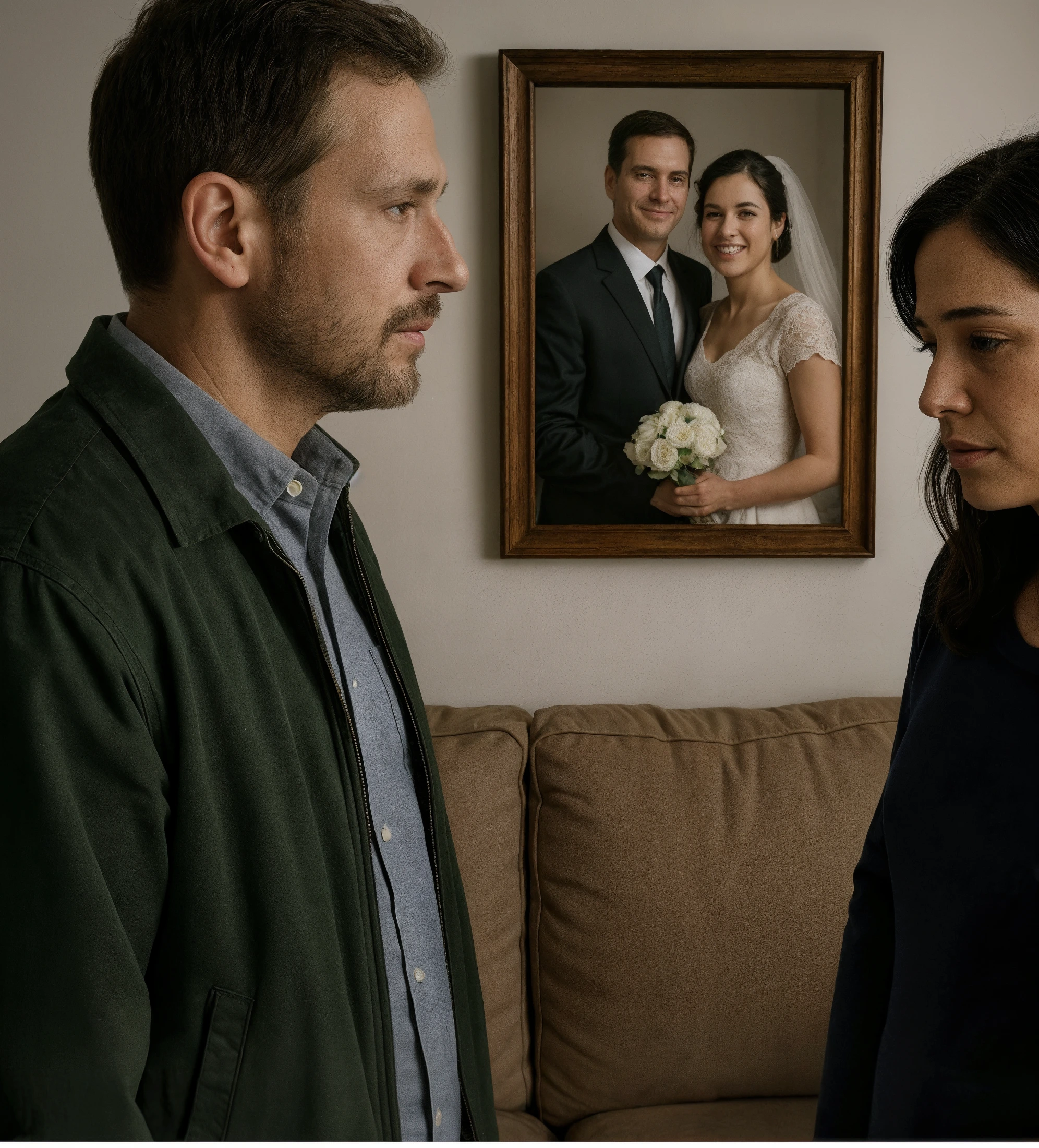
On the living room wall, above the small velvet sofa, hung a framed photograph. What I saw within it sent a chill down my spine.
It depicted a boy—around four years old, with brown eyes, dark hair, and a sweet smile. He was nestled in the arms of Althea, smiling at the camera with that particular sparkle in her eyes that I hadn’t seen in over five years.
But what truly took my breath away was a subtle yet devastating detail: this child… shared my smile.
“Who is he?” I asked, my throat tightening.
Althea diverted her gaze, taking a deep breath.
“His name is Daniel.”
“Your son?”
She nodded, unable to meet my eyes.
A storm of thoughts overwhelmed me, crashing like waves. How was this possible? She had been declared infertile. I recalled every doctor’s visit, every test, every tear shed. I remembered the nights I held her tight, desperately trying to alleviate her pain.
“But… the doctors… they said…”
“I know what they said,” she interrupted, her voice low and trembling. “And they were right. I couldn’t have children.”
I fell silent. So, who was this child?
She turned to me, tears streaming down her face.
“I adopted him.”
Her words hung in the air like a heavy fog.
“After we separated,” she continued, “I entered an adoption program. I thought I’d never muster the courage to love again. But one day, when I visited a shelter in Tlaquepaque, I saw this boy sitting in a corner, sketching with a broken pencil. He looked at me… and in his eyes, I recognized a loneliness I understood all too well.”
Althea smiled through her tears.
“He had been abandoned, too. He lost his parents in an accident. I held him, and it felt like something inside me awakened.”
She lowered her gaze.
“His name was Daniel. I didn’t change it. He was already Daniel. And ironically… it was the name you wanted to give our son, remember?”
My world felt like it was collapsing beneath me. I recalled our late-night conversations about children, names, and a future that never materialized. Daniel. A name that lingered between us like an unfulfilled dream.
I stared at the photograph, unsure of what to say. The child smiled innocently, unaware of the weight of this revelation.
“He looks like me,” I whispered, almost unconsciously.
She took a deep breath.
“I know. That’s why it took me so long to tell you. Because every time I saw him smile, I also saw a bit of you.”
The rain outside pounded against the windows, as if even the heavens were weeping.
“Why didn’t you ever tell me?” I asked, struggling to steady my quaking voice.
“Because I didn’t believe I had the right to hurt you again,” she replied. “I knew you wanted to be a father, but not with me. And when I finally managed to adopt him, I thought you had already moved on.”
She ran her fingers through her hair, fatigued.
“I lived with guilt for years. I thought I was freeing you from the burden of an ‘imperfect’ woman, but in the end… I was the one carrying the pain.”
Words escaped me. All I felt—anger, compassion, sadness—intertwined into a knot impossible to unravel.
“I never wanted to be free from you,” she finally said. “I only wished to see you happy. But I suppose I never understood how much you were suffering inside.”
She looked at me, startled. Then, for the first time in many years, our eyes met without bitterness.
“He’s sleeping,” she said softly. “Do you want to see him?”
I nodded.
We walked to the small room at the end of the hallway. The walls were adorned with colorful drawings: houses, trees, and a figure of a woman and a man holding hands with a child in between.
“He said that’s us,” Althea whispered. “Me, my mom, and the angel dreaming.”
A chill ran through me. The child lay peacefully asleep, hugging a teddy bear. I approached slowly and, without thinking, brushed my fingers lightly through his hair.
“He’s beautiful,” I murmured.
Althea nodded, her eyes filled with tears.
“He’s the greatest gift life has ever given me.”
We lingered there in silence for a while, watching that little miracle breathe serenely. And in that moment, I understood something I had never grasped before: true love isn’t about what fate takes away from us, but what we are still capable of giving, even after having lost everything.
That night, before I left, Althea walked me to the door. The rain had subsided, and the air was filled with the scent of damp earth.
“Thank you for coming in,” she said.
She smiled.
“Perhaps it was destiny that brought you here today. I’ve thought about you a lot, you know? Sometimes Daniel would ask me why he didn’t have a father. I told him his father lived in the sky… but the truth is the sky always had your face.”
My heart sank.
“If you want, I can come to visit him from time to time.”
She hesitated for a moment, then nodded.
“I think he would appreciate that.”
We said goodbye with a long, silent embrace. And for the first time in a long while, I felt that the past was no longer a raw wound but a scar that I could touch now without pain.
The following months brought a new routine. I visited Daniel on weekends. We played ball, built models from cardboard boxes, and he called me “Uncle Andrés.”
Althea watched from a distance, always wearing that tender smile. Occasionally, we stayed up late talking, reminiscing, and laughing at the foolishness of our youth. The friendship that once had been love was blooming again in a new form—calm, mature, beautiful.
One day, while assisting Daniel in constructing a castle with blocks, he asked:
“Uncle, why don’t you and mom live together?”
I was at a loss for words. Althea, who was in the kitchen, froze as well.
“Because…” I began slowly, “sometimes people who care for each other need to live in separate homes to learn how to understand each other again.”
He furrowed his brow in thought, then said something that disarmed me:
“So learn quickly, so you can be together.”
I glanced at Althea. She smiled, tears in her eyes.
Time passed. Daniel grew, and I became an inseparable part of his life. Visits turned into dinners, and dinners into short trips. Before we knew it, we were once again a family—imperfect, but real.
One Sunday, during a picnic at the Metropolitan Park, Daniel ran to pick some flowers. When he returned, he handed me one and gave another to his mother.
“Now you two have to marry again,” he said, laughing.
Althea laughed too, but there was something different in her eyes—a long-lost, sweet glimmer, just like when we were young.
Later that evening, after putting him to bed, she called me to the porch. The breeze was light, and the sky was clear.
“You know…” she said, “sometimes I think God never intended for us to have a biological child. He wanted us to have Daniel. He was just waiting for us to find each other again.”
I looked at her, and for the first time in years, everything made sense.
“I believe destiny was simply waiting for the right moment,” I replied.
She smiled, and then, without words, we embraced. Time stood still. The past, with all its pain, seemed to finally find peace in the present.
Five years after that rainy night, the picture on the wall had changed. Now, there were three smiling faces: hers, mine, and Daniel’s, radiating the same light as before—this time, without absences, without guilt, without secrets.
And every time I look at that photo, I remember what I learned too late: true love doesn’t have to be perfect to last; it merely needs to be sincere enough to start anew.
Because sometimes, the deepest mistake we make isn’t losing the person we love—it’s thinking that love has ended when, in fact, it was just waiting for a new reason to exist.